Showing posts with label News. Show all posts
Showing posts with label News. Show all posts
Traps from delicious foods? Eat right and have better sperm
December 15, 2017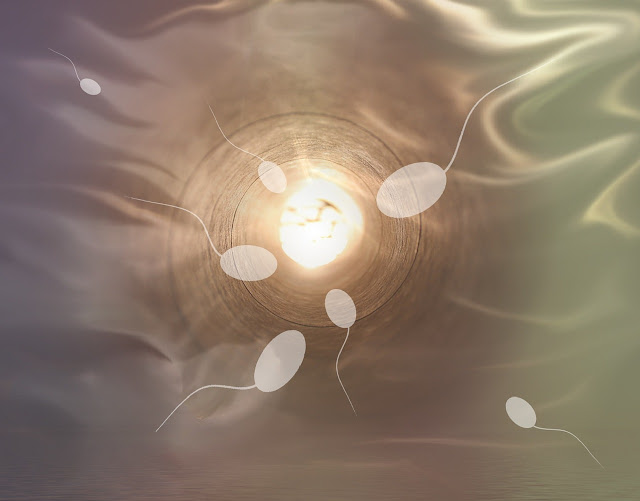

Do you like wearing a tight pants or putting your laptop on your thighs? These habits may affect the quality of your sperm. Besides, five types of drinks/foods may harm your reproductive system. Let’s check and keep in mind!
According to <<Epicurious>>, if the quality of your sperm is not good, it may affect your family plan. To maintain the good quality of sperm, the uptakes of following drinks/foods must be controlled.

Alcohols dehydrates the water in our bodies, and increases the risk of obesity, and reduces the mobility of sperms. We suggest not drinking alcohol more than once per week, and therefore the bodies can metabolize the alcohol. But if you have severe reproductive problem, it is better to quit alcohol.

2. Processed meat products
Bacon, ham and burger are delicious, but these processed meat products usually contain high proportion of saturated fat and hormone residues, which harm the quality of sperm. If you like meat, have the “fresh” one.

3. Sweet Drinks
Bubble milk tea or other sweet drinks contain high proportion of sugar reduce both the quantity and quality of sperm. It’s better for us to drink water.

4. High-fat dairy products
Milk, cheese and other dairy products can provide protein, calcium and other nutrients. But the high fat contained in these products may harm male’s reproductive system. Also, pesticide or hormone residues should be concerned in some dairy products.

5. Fruits with pesticide residues
Some of the fruits or vegetables may have pesticide residues, especially apples, grapes, strawberries, spinach, cucumbers, etc. We suggest choosing organic fruits and vegetables to decrease the risk.
Stay away from bad habits and unhealthy foods/drinks. Get your sperm good!
Our oocyte bank
November 23, 2017

Bank Director "Wan-Jung, Ashley, Hsieh"
Ashley has worked at another biotech company for a long time, and she came to Hsinchu city because of her husband's job transfer. It was very lucky to have Ashley at Stork Fertility Center, since she was a very energetic and optimistic team member. Ashley started her work here as both a consultant and embryologist. That's why she understood the feeling and psychological stress of these female friends. She stayed at the embryology lab for eight years, and was very familiar with the clinical side of IVF.

When she began to take charge of the oocyte donation, she found that so many people were eager to have their own babies, but no own "eggs" could be used. The requirement of documentation and matching process would provide her a chance to connect with the case tightly. She loved to be a "pen-pal" of these female friends, sometimes, even overseas friends.

She knew that being the egg recipient could be a dilemma to the couple. And, deciding to donate the eggs to the anonymous couple was a big thing for a young woman as well. It was not common in the traditional Chinese society, but it was the easier way to start a family for some couples (compared to adopted the children in Taiwan).
Thus she worked hard on this field, and finally helped the Stork Fertility Center to build its own oocyte bank.
The oocyte bank efficiently shortens the entire oocyte donation program, since the available oocytes were already cryopreserved and ready to be matched. Ashley now are the mother with two lovely kids, and she hope that all the women could as luck as her family.

IVF at 40. Louise Brown: My life as the world’s first ‘test tube baby’
October 12, 2017

Original article: https://inews.co.uk/essentials/lifestyle/people/ivf-40-louise-brown-life-worlds-first-test-tube-baby/
On 10 November 1977, almost 40 years ago, the world’s first embryologist Jean Purdy observed that an embryo in a petri dish had divided into eight cells. It was implanted in Lesley Brown, and after nine years trying and failing to conceive, she became pregnant. 38 weeks later, her daughter Louise Joy Brown was born. She was the first of more than six and a half million – and counting – babies born by IVF. Only a member of royalty receives the level of attention that birth of the world’s first ‘test tube baby’, attracted. In hospital in Oldham, photographers hoping for a picture of the newborn triggered a bomb scare, meaning patients had to be temporarily evacuated. And when Louise’s father John first met his daughter, who’d undergone at birth more than 60 tests to check she was ‘normal’, the hospital corridors were lined with police.

Louise says that her mother didn’t “truly realise” that this was a world first until she was heavily pregnant. “When she saw Patrick [Steptoe], there were mums with babies and pregnant women in the waiting room, so she assumed it had worked before.” Her mother kept all the postbags of cards that were sent congratulating the couple, and the “weird” mail too, including one package including a plastic foetus and broken test tube: “A lot of Catholic objection – and apparently I could read things with my mind and teleport stuff.” It has taken Louise decades to feel entirely comfortable in her role of being famous by birth. “When I was younger it could play on my mind that everyone knows my name,” she says. “But now I like raising awareness and really enjoy meeting people who have been helped, indirectly, by Patrick and Bob’s [Robert Edwards] work.”

Louise was able to conceive both of her sons without fertility treatment, and believes that until you’ve been put in the situation of not being able to have children, “you can’t understand it.” Her mother’s fertility problems were only recognised when she went to the doctor with depression, and her GP tried to discover the root cause. Today, the practice that seemed so controversial 40 years ago is commonplace. “It’s opened things up for couples that need help, same sex couples, these are all positives,” Louise says. “It’s mind blowing.”

Our embryologist
September 12, 2017

Lab Director Wen-Yi, Julia, Chiang

Julia has worked at the department of assisted reproduction technology (ART) for 16 years. And now, she is the director of the embryology lab, supervising the ART procedures, oocyte cryopreservation, and technique upgrading.
A sense of mission
Julia started from a consultant, and truly understood what the customers need. She likes listening their sharing, as well as the story behind. Once she received a call, telling that she couldn't make the injection herself. Julia finished the routine works as soon as possible, and drove to that case's home to do the injection. Just like caring the patient, she served the embryo with all her heart.
"I always remind myself not to forget my original mind."

With department of nursing
Be a learner
Although the daily work is tight now, Julia doesn't stop learning. At Stork Fertility Center, every patient has her own "pregnancy code," calculating the possibility of getting pregnancy based on the individual profile and IVF outcomes. This code is fully personalized, and also providing an indication for adjusting the following ART procedures. Julia believed that the works of an embryologist should not be routine, and there are many unknowns in this realm.
"The ART equippments are improved every day, so are we (embryologists)."

Always dreaming
Although the daily work is tight now, Julia doesn't stop learning. At Stork Fertility Center, every patient has her own "pregnancy code," calculating the possibility of getting pregnancy based on the individual profile and IVF outcomes. This code is fully personalized, and also providing an indication for adjusting the following ART procedures. Julia believed that the works of an embryologist should not be routine, and there are many unknowns in this realm.
"The ART equippments are improved every day, so are we (embryologists)."

With department of ART
Always dreaming
A 57-year-old case impressed Julia so much. After the patient's children going to the primary school, Julia still visited her family annually. Because the companion was from the beginning to the end during IVF, Julia still remembered her expression after hearing the pregnancy result. This memory pushed Julia to face each challenge bravely, and she said to herself,
" Every embryo is a dream from the family. I just want to realize the dream."
Our doctors
July 28, 2017

Dean
Dr. Hsing-Hua Lai, MD

Specialties
‧Infertility diagnosis and treatment
‧Reproductive endocrinology
‧Intrauterine insemination (IUI)
‧In vitro fertilization (IVF)
‧Oocyte cryopreservation
‧Preimplantation genetic diagnosis (PGD)
‧Hysteroscopy
Experience
- Training program of Reproductive Endocrinology and Infertility, National University of Singapore, Singapore
- Research Fellow of Reproductive Endocrinology and Infertility, Taipei Veterans General Hospital,Taiwan
- Director of Obstetrics and Gynecology Department and Reproductive Medicine Center, Nan Men General Hospital,Taiwan
- Doctor of Obstetrics and Gynecology, Taiwan
- Fertility specialist, Taiwan
- Member of Taiwan Association of Obstetrics and Gynecology, Taiwan
- Member of Taiwanese Society for Reproductive Medicine, Taiwan
- Member of Taiwan Association for Endoscopic Surgery, Taiwan
Personal website
http://charmingrung.pixnet.net/blog
Dr. Huai-Ling Wang, MD

‧Infertility diagnosis and treatment
‧Reproductive endocrinology
‧Intrauterine insemination (IUI)
‧In vitro fertilization (IVF)
‧Oocyte cryopreservation
‧Hysteroscopy
‧Laparoscope
Experience
- Resident Physician, Obstetrics and Gynecology Department ,Taipei Veterans General Hospital, Taiwan
- Obstetrics and Gynecology Specialist, Taipei Veterans General Hospital, Taiwan
- Attending Physician, Obstetrics and Gynecology Department, Hsinchu Veterans General Hospital, Taiwan
- Attending Physician, Obstetrics and Gynecology Department, Hsinchu Nan Men General Hospital, Taiwan
- Doctor, Obstetrics and Gynecology, Taiwan
- Fertility Specialist, Taiwan
- Member, Taiwan Association of Obstetrics and Gynecology, Taiwan
- Member, Taiwanese Society for Reproductive Medicine, Taiwan
- Member,Taiwan Association for Endoscopic Surgery, Taiwan
- Obstetrics and Gynecology Specialist, Taipei Veterans General Hospital, Taiwan
- Attending Physician, Obstetrics and Gynecology Department, Hsinchu Veterans General Hospital, Taiwan
- Attending Physician, Obstetrics and Gynecology Department, Hsinchu Nan Men General Hospital, Taiwan
- Doctor, Obstetrics and Gynecology, Taiwan
- Fertility Specialist, Taiwan
- Member, Taiwan Association of Obstetrics and Gynecology, Taiwan
- Member, Taiwanese Society for Reproductive Medicine, Taiwan
- Member,Taiwan Association for Endoscopic Surgery, Taiwan
Personal website

‧Infertility diagnosis and treatment
‧Reproductive endocrinology
‧Intrauterine insemination (IUI)
‧In vitro fertilization (IVF)
‧Oocyte cryopreservation
‧Invasive gynecology
‧Laparoscopic surgery
‧Diagnosis and treatment of endometriosis, polycystic ovary syndrome and menopausal syndrome
‧Reproductive endocrinology
‧Intrauterine insemination (IUI)
‧In vitro fertilization (IVF)
‧Oocyte cryopreservation
‧Invasive gynecology
‧Laparoscopic surgery
‧Diagnosis and treatment of endometriosis, polycystic ovary syndrome and menopausal syndrome
- Resident Physician, Obstetrics and Gynecology Department, Linkou Chang Gung Memorial Hospital, Taiwan
Dr. Meng-Ju Lee, MD

Specialties
‧Infertility diagnosis and treatment
‧Reproductive endocrinology
‧Intrauterine insemination (IUI)
‧In vitro fertilization (IVF)
‧Oocyte cryopreservation
‧Hysteroscopy
- Chief Resident, Obstetrics and Gynecology Department, Linkou Chang Gung Memorial Hospital, Taiwan
- Research Fellow, Reproductive Endocrinology Division, Taipei Chang Gung Memorial Hospital, Taiwan
- Attending Physician, Reproductive Endocrinology Division, Taipei Chang Gung Memorial Hospital, Taiwan
- Director,Obstetrics and Gynecology, Taipei Chang Gung Memorial Hospital, Taiwan
- Doctor, Obstetrics and Gynecology, Taiwan
- Fertility Specialist, Taiwan
- Member, Taiwan Association of Obstetrics and Gynecology, Taiwan
- Member, Taiwanese Society for Reproductive Medicine, Taiwan
- Consultant Doctor, Endometriosis Association, Taiwan
- Doctor, Obstetrics and Gynecology, Taiwan
- Fertility Specialist, Taiwan
- Member, Taiwan Association of Obstetrics and Gynecology, Taiwan
- Member, Taiwanese Society for Reproductive Medicine, Taiwan
- Consultant Doctor, Endometriosis Association, Taiwan

Specialties
‧Infertility diagnosis and treatment
‧Reproductive endocrinology
‧Intrauterine insemination (IUI)
‧In vitro fertilization (IVF)
‧Oocyte cryopreservation
‧Hysteroscopy
Experience
- Resident Physician, Obstetrics and Gynecology Department, Taipei MacKay Memorial Hospital, Taiwan
- Resident Physician, Obstetrics and Gynecology Department, Taipei MacKay Memorial Hospital, Taiwan
- Chief Resident, Obstetrics and Gynecology Department, Taipei MacKay Memorial Hospital, Taiwan
- Research Fellow, Reproductive Endocrinology and Infertility Division, Taipei MacKay Memorial Hospital, Taiwan
- Research Fellow, Reproductive Endocrinology and Infertility Division, Taipei MacKay Memorial Hospital, Taiwan
- Attending Physician, Obstetrics and Gynecology Department, Hsinchu MacKay Memorial Hospital, Taiwan
- Doctor, Obstetrics and Gynecology, Taiwan
- Fertility Specialist, Taiwan
- Member, Taiwan Association of Obstetrics and Gynecology, Taiwan
- Member, Taiwanese Society for Reproductive Medicine, Taiwan
Personal website
Sheraton Hotel x Stork Fertility Center
June 08, 2017

Plant a seed in the past,
Reap a crop in the future;
Store an egg for the future,
Receive a gift from the past.

It is called "Platinum Project."
The Platinum Project is designed for the women from the other cities or countries to do both the egg freezing and touring at once. A typical egg freezing cycle involves controlled ovarian stimulation (around 10 days) and oocyte retrieval. Usually going to the fertility center for retrieval operation is necessary, and it would take around half a day. This project plans a "light tour" for the time after oocyte retrieval, and a personal Platinum butler would arrange the related hospitality, transportation, and tourist attractions nearby.


This project includes one night with dinner and breakfast, and provides discount of 20% (TWD 5,500).
Since the structure and style of society was changed dramatically, the number of women who need oocyte cryopreservation for social reason continued increasing every year. In 2012, Stork Fertility Center provided a more convenient protocol for overseas cases, and only two visits to Taiwan was required. The women from mainland China, Hong Kong, Macau, Japan, and Singapore, decided to freeze eggs at our iCryobank. Most of the above countries don't allow people to do oocyte cryopreservation for the social reason. Thus coming to Taiwan became one of the solutions.
Like the oocyte preservation itself, the experience of the process should be also beautiful, full with joy. The biological clock of frozen oocytes was stopped, and the hope of being parents was then preserved. One day, these oocytes would be thawed, fertilized, cultured, and put back to the maternal womb.
Life continues.
I feel bloated—ovarian hyperstimulation syndromes (OHSS)
April 17, 2017

Ms. Helen started appointments with me since last year. She has been married for two years without preventing pregnancy, but still no good news released. By several examinations, I found that she has some features of polycystic ovarian syndromes.
Compared to the average age of entire IVF cases, Helen was still young, and she would not like to jump into the assisted reproduction technology too fast. Hence she tried clomiphene citrate several times in timed sexual intercourse (TSI) program. Unfortunately, it did not work. For some cases, clomiphene citrate could have adverse effect on the endometrial thickness, and thus the embryo implantation may fail. Concerning this point, we discussed about the mild stimulation injections (recombinant rFSH) in intrauterine inseminationprogram.
As expected, the response of Helen's ovaries to the injections was good. With lower dosage, both the size of follicles and blood estrodial level were steadily increased. Since higher risk of ovarian hyperstimulation syndromes (OHSS) in the IUI cases was well known, I used the GnRH agonist to trigger and gave a complete consultation to Helen and her husband before the insemination.
Three days after insemination, Helen came back to the clinic and felt very uncomfortable. Her belly seemed obviously bloated. Through abdominal ultrasound observation, the image showed that around 2000ml of ascites accumulated there. I arranged the laparocentesis to drainage the fluid and appropriate albumin/electrolyte supplements through intravenous infusion. Sooner after, her bloating symptom was relieved. Another three days later, I saw Helen's belly accumulated 2000ml of ascites again, and she underwent the similar treatment. In the last three weeks, repeated bloated and laparocenteses filled in Helen's daily life. And also, we found that Helen got twins in her uterus.

Helen is a typical type of OHSS.
The actual mechanism of OHSS remains unclear. Generally, it was believed to the consequence of interactions among progesterone, estrodial, beta-HCG, and vascular endothelial growth factor (VEGF). Increased concentration of the above hormones induces elevated vascular permeability. Both the fluid and related contents (albumin, electrolytes) flow out of the vessels, and then accumulate at the chest, abdomen, or lymphatic system. Thus a serial of symptoms is derived.


Oocyte spindle and embryo ploidies
June 20, 2016

From oocyte retrieval to blastocyst cryopreservation, the best timing to do fertilization is always an important issue in the IVF realm. The techniques of ICSI, or IMSI, can help the embryo technician select the sperm with the best morphology to increase the fertilization rate. After the development of spindle microscope (an modified microscope which can observe the spindle of oocyte), the question of "when to fertilize?" has emerged.
In the newly-released article of Science, the author explained the reason of higher chromosomal aneuploidy in human oocytes in comparison with the other human somatic cells, and mouse oocytes. Holubcova el al. developed a time-lapse system combing with vital stain of human oocyte to record the oocyte maturation process (from GVBD to MII).

They found that the time from GVBD (geminal vesicle breakdown) to initial chromosome congression (~16 hrs) was significantly longer than those in the other mammal meiosis (~3-5 hrs). Instead of mediating by centrosomes or MTOCs (microtubule organizing centers), the mediator in human oocyte meiosis was chromosome itself (Ran-GTP).

Lacking of centrosomes or MTOCs led spindle formation in human oocytes intrinsically unstable and error-prone, and then it made the higher aneuploid rate due to maternal origin in the following embryo propagation.


Of the application in IVF, this time-lapse video of oocyte maturation may provide the users of spindle microscope more information about the accurate timing to do the fertilization, or to cryopreserve the MII eggs.
Original article:
Zuzana Holubcova, Martyn Blayney, Kay Elder, and Melina Schuh
Science 2015;348:1143-1147.
Doctor, my baby is small. How can I do?
April 20, 2016

Nancy lived with her younger sister for a long time until they found each own Mr. Right. They still kept tight after getting married. However, they both faced a difficulty at the same time — having no baby. Her sister chose to take the IVF treatment earlier due to the family stress. After two cycles, she finally delivered a cute baby girl. Nancy was encouraged by her sister, and met the fertility specialist with her husband.
She chose the IVF treatment directly as well, and got pregnant after one cycle. Although the bleeding frequently occurred during the first trimester, the gestation continued stably and no abnormality was reported, including her amniocentesis. Until six months of gestation, the obstetrician told her that the baby was smaller for the gestational age. The news made Nancy shocked and nervous.

So many mothers-to-be are like Nancy, and they are nervous about the body weight of fetuses.
There are several affecting factors to the fetal weight, such as congenital effects (different races or locations), nutrition intake, placental function, environmental risk or diseases. Usually, the fetus reported as small for gestational age (SGA) means that the fetal weight was under the 10th percentile of totality, or under the average gestational weight over two standard deviations. SGA roughly defines the fetuses with lower weights caused by any reasons, and 1/4 of SGA cases still can develop normally.
Intrauterine growth restriction (IUGR) specifically defines the fetuses with lower weights caused by some morbid reasons, including chromosomal abnormality, placental calcification or other diseases.
Two types of IUGR
1. Symmetrical IUGR:
There are several affecting factors to the fetal weight, such as congenital effects (different races or locations), nutrition intake, placental function, environmental risk or diseases. Usually, the fetus reported as small for gestational age (SGA) means that the fetal weight was under the 10th percentile of totality, or under the average gestational weight over two standard deviations. SGA roughly defines the fetuses with lower weights caused by any reasons, and 1/4 of SGA cases still can develop normally.
Intrauterine growth restriction (IUGR) specifically defines the fetuses with lower weights caused by some morbid reasons, including chromosomal abnormality, placental calcification or other diseases.
Two types of IUGR
1. Symmetrical IUGR:
It is mostly caused by the intrinsic reasons in fetus self. Both the weight and length are reduced. It could be due to aneuploidic syndromes (trisomy 13, trisomy 18) or intrauterine infection.
2. Asymmetrical IUGR:
It was mostly caused by the maternal reasons. The length and head circumference are in the normal range, but the weight is small. Asymmetrical IUGR often occurs in the last three months of gestation. It could be due to pre-eclampsia, diabetes, smoking or some medications.
2. Asymmetrical IUGR:
It was mostly caused by the maternal reasons. The length and head circumference are in the normal range, but the weight is small. Asymmetrical IUGR often occurs in the last three months of gestation. It could be due to pre-eclampsia, diabetes, smoking or some medications.
Since fetal distress is more frequent in the SGA cases, the early diagnosis is very important. If SGA was observed, the doctors would classify the types and reevaluate the expected-date of child. By amniocentesis, the risk of chromosomal abnormality can be diagnosed. If the mother had diabetes or hypertension, both the medication and placental blood screening were necessary to ensure the blood/oxygen supply to fetus. Weekly non-stress test (NST) should be performed after three months of gestation to check the placental function continuously.
Generally, the fetal weight should be increased stably during gestation. Either over-weight or SGA should be consulted with the obstetricians to avoid any risk affecting fetal development.
Generally, the fetal weight should be increased stably during gestation. Either over-weight or SGA should be consulted with the obstetricians to avoid any risk affecting fetal development.

Common Genetic Variant Linked to IVF Failure
October 15, 2015

Original source: http://www.medscape.com/viewarticle/852455
Neil Osterweil
October 09, 2015
A genetic variant commonly found in women is strongly associated with chromosomal abnormalities that can lead to the failure of in vitro fertilization (IVF), investigators report.
An analysis of embryos submitted for preimplantation genetic screening showed that the variant in the mother's genome appears to be linked to a gene responsible for abnormal rearrangements of chromosomes that occur during cellular replication, said Rajiv McCoy, PhD, a postdoctoral research fellow at the University of Washington in Seattle.
He presented the results here at the American Society of Human Genetics 2015 Annual Meeting.
These abnormal rearrangements, or mitotic aneuploidies, are common in 3-day-old blastomeres (D3 cleavage embryo), but are rare in 5-day-old embryos (D5 blastocyst), suggesting that the embryos that carry the aneuploidies do not survive. The presence of the genetic variant could explain why some women have particular difficulty with fertility, Dr McCoy told Medscape Medical News.
The investigators hypothesized that because "the first three embryonic cell divisions are controlled by maternal gene products deposited into the egg before the embryo's genome is actually turned on, or becomes active, variation in these maternal gene products might influence rates of aneuploidy in early embryos," he explained.
In a previous study Dr McCoy was involved in, a close association was shown between the rs2305957 single-nucleotide polymorphism (SNP) and high rates of error during embryonic mitosis (Science. 2015;348:235-238). In addition, it was determined that this SNP is found in high frequency in all women.
SNP Found
In that study, the SNP was traced to a region of chromosome 4 that harbors a candidate causal gene,Polo-like kinase 4 (PLK4), which is known to regulate chromosomal distribution during cellular division.
In their current investigation, Dr McCoy and his colleagues analyzed 46,439 embryos from 6366 embryo cycles submitted by about 2400 women for preimplantation genetic diagnosis (PGD).
In addition to finding an association between the SNP and the genotype, they found that aneuploid embryos were more likely to have come from women with a history of IVF failure, which suggests that aneuploidy caused the treatment to fail.
"When we look at just the number of embryos that are submitted at day 5 for the different genotypic classes of mothers, we see that mothers with the high-risk allele, with higher rates of aneuploidy in 3-day embryos, submitted fewer embryos for testing at day 5, which supports our idea," said Dr McCoy.
If about half of all women have this genetic variant, as studies suggest, it raises the question of why the SNP has not been selected out during human evolution.
The investigators hypothesize that there might be a survival advantage to live-born children of parents with fertility problems. If, the thinking goes, such parents have only one or two, instead of multiple, children, their genetic and emotional investment in the survivors would be all the greater, and those children would be more likely to live to reproductive age, and thus pass on the otherwise deleterious SNP.
The investigators hope to identify the gene responsible for mitotic aneuploidy in these cases and, ideally, determine the underlying molecular mechanisms.
"This is fascinating to think about," said Chris Gunter, PhD, associate professor of pediatrics at the Emory University School of Medicine in Atlanta.
A lot of the research on the genetics of infertility "has looked at whether there are imbalances in the embryo," she told Medscape Medical News. "This is something in the maternal environment that would contribute to that."
This research was internally supported. Dr McCoy and Dr Gunter have disclosed no relevant financial relationships.
American Society of Human Genetics (ASHG) 2015 Annual Meeting: Abstract 200. Presented October 8, 2015.
In their current investigation, Dr McCoy and his colleagues analyzed 46,439 embryos from 6366 embryo cycles submitted by about 2400 women for preimplantation genetic diagnosis (PGD).
In addition to finding an association between the SNP and the genotype, they found that aneuploid embryos were more likely to have come from women with a history of IVF failure, which suggests that aneuploidy caused the treatment to fail.
"When we look at just the number of embryos that are submitted at day 5 for the different genotypic classes of mothers, we see that mothers with the high-risk allele, with higher rates of aneuploidy in 3-day embryos, submitted fewer embryos for testing at day 5, which supports our idea," said Dr McCoy.
If about half of all women have this genetic variant, as studies suggest, it raises the question of why the SNP has not been selected out during human evolution.
The investigators hypothesize that there might be a survival advantage to live-born children of parents with fertility problems. If, the thinking goes, such parents have only one or two, instead of multiple, children, their genetic and emotional investment in the survivors would be all the greater, and those children would be more likely to live to reproductive age, and thus pass on the otherwise deleterious SNP.
The investigators hope to identify the gene responsible for mitotic aneuploidy in these cases and, ideally, determine the underlying molecular mechanisms.
"This is fascinating to think about," said Chris Gunter, PhD, associate professor of pediatrics at the Emory University School of Medicine in Atlanta.
A lot of the research on the genetics of infertility "has looked at whether there are imbalances in the embryo," she told Medscape Medical News. "This is something in the maternal environment that would contribute to that."
This research was internally supported. Dr McCoy and Dr Gunter have disclosed no relevant financial relationships.
American Society of Human Genetics (ASHG) 2015 Annual Meeting: Abstract 200. Presented October 8, 2015.
Are you afraid of testicular sperm extraction (TESE)?
September 02, 2015

Before starting the IVF program, the diagnostic microdissection testicular sperm extraction can improve the success rate of surgical sperm extraction on the oocyte retrieval day. It would be a great news in the couples with azoospermia.
Azoospermia is a severe male factor in the infertility, and the occurrence is around 15% in the infertile men. There are two types of azoospermia,—obstructive and non-obstructive. In the patients with the obstructive azoospermia, the testes are able to produce functional sperms (spermatozoa), but the duct is blocked. In the patients with the non-obstructive azoospermia, the testes are unable to produce functional sperms, and the original cause have not been identified yet in 76% of the patients. The fertility specialist generally recommended these patients to take microsurgical epididymal sperm aspiration (MESA; in the patients with obstructive azoospermia) or testicular sperm extraction (TESE; in the patients with non-obstructive azoospermia) combing with intracellular single sperm injection (ICSI) in the IVF program.
The microdissection testicular sperm extraction (micro-TESE) has the advantages avoiding the damage of testes blood supply or larger trauma. It makes a small incision (4~5cm) on the scrotum to take testes out. After cutting the tunica albuginea along the equatorial plane, the seminiferous tubule can be examined and then be biospied under the operating microscope. If the diameter of a particular seminiferous tubule is over 300μm, the sperm retrieval rate could be significantly increased.

Seminiferous tubule diameter(μm) | >300 |
Sperm retrieval rate(%) | 84 |
However, the micro-TESE may not work in 40-50% of the patients with non-obstructive azoospermia. It could happen that no extracted sperms can be used on the oocyte retrieval day, and the patients must cryopreserve their eggs instead.
Therefore, the diagnostic microdissection testicular sperm extraction (diagnostic mTESE) was developed. The diagnostic mTESE is doing the micro-TESE before the operation on the oocyte retrieval day. By conducting the Touch print smear (TPS), the biopsied sample can be stained to examine the existence of mature sperms with the freezing tissue-processing method. The site of found mature sperms would be recorded as references for the operation on the oocyte retrieval day.
During 2012 to 2014, 152 patients with non-obstructive azoospermia were recruited to evaluate the efficacy of the procedure. In the recruited cohort, the sperm retrieval rate with diagnostic mTESE was 45.3%, and then the rate on the oocyte retrieval day is almost 100%. It strongly proved that an advance diagnostic mTESE could improve the sperm retrieval rate on the oocyte retrieval day. It could prevent the unexpected egg-freezing in the IVF program, and also lessen the psychological stress in the patients.
References:
2015 Symposium, The Taiwanese Association of Andrology
Microdissection testicular sperm extraction:an update. Asian J Androl. 2013 Jan; 15(1): 35–39