Showing posts with label IUI. Show all posts
Showing posts with label IUI. Show all posts
I feel bloated—ovarian hyperstimulation syndromes (OHSS)
April 17, 2017

Ms. Helen started appointments with me since last year. She has been married for two years without preventing pregnancy, but still no good news released. By several examinations, I found that she has some features of polycystic ovarian syndromes.
Compared to the average age of entire IVF cases, Helen was still young, and she would not like to jump into the assisted reproduction technology too fast. Hence she tried clomiphene citrate several times in timed sexual intercourse (TSI) program. Unfortunately, it did not work. For some cases, clomiphene citrate could have adverse effect on the endometrial thickness, and thus the embryo implantation may fail. Concerning this point, we discussed about the mild stimulation injections (recombinant rFSH) in intrauterine inseminationprogram.
As expected, the response of Helen's ovaries to the injections was good. With lower dosage, both the size of follicles and blood estrodial level were steadily increased. Since higher risk of ovarian hyperstimulation syndromes (OHSS) in the IUI cases was well known, I used the GnRH agonist to trigger and gave a complete consultation to Helen and her husband before the insemination.
Three days after insemination, Helen came back to the clinic and felt very uncomfortable. Her belly seemed obviously bloated. Through abdominal ultrasound observation, the image showed that around 2000ml of ascites accumulated there. I arranged the laparocentesis to drainage the fluid and appropriate albumin/electrolyte supplements through intravenous infusion. Sooner after, her bloating symptom was relieved. Another three days later, I saw Helen's belly accumulated 2000ml of ascites again, and she underwent the similar treatment. In the last three weeks, repeated bloated and laparocenteses filled in Helen's daily life. And also, we found that Helen got twins in her uterus.

Helen is a typical type of OHSS.
The actual mechanism of OHSS remains unclear. Generally, it was believed to the consequence of interactions among progesterone, estrodial, beta-HCG, and vascular endothelial growth factor (VEGF). Increased concentration of the above hormones induces elevated vascular permeability. Both the fluid and related contents (albumin, electrolytes) flow out of the vessels, and then accumulate at the chest, abdomen, or lymphatic system. Thus a serial of symptoms is derived.


What is IUI?
February 26, 2014IntraUterine Insemination/IUI

What is IUI?
Although many have heard the term “Artificial Reproduction” before, majority do not fully understand it. Actually, it is a relatively simple concept – collected sperm is prepared by utilizing Swim-up Technique, Density Gradient or Centrifugation with Washing to separate potentially fertile spermatozoa from immotile ones and remove any bacteria, debris, chemicals and seminal plasma. Preparation improves sperm’s motility, increasing its ability to penetrate the oocyte.
Only selected sperm, with high forward motility will be inseminated to induce pregancy.

Who are candidates for IUI?
Couples must be legally married and healthy. The wife should have a normal uterus/ ovary/ fallopian tubes and the husband should have quality sperm (high count, good forward motility). Couples experiencing any of the below problems can utilize IUI to assist conception:
1) Cervical mucus scarcity or cervical stenosis
2) Irregular sex life and/or sexual disorder
3) Still failed to conceive despite trying to get pregnant for six (6) months
4) Unexplained infertility
5) Male infertility: low quality spermatozoa such as low forward motility and quantity, abnormal morphology, etc.
IUI Procedure
There are different types of artifical imsemination, including Intra-cervical insemination (ICI) or Intre-uterine insemination (IUI). There is no marked difference in the succes rates. The method used will depend on the client’s specific needs; however, IUI is the most common.

Important Reminders
Sperm insemination is relatively painless and patients need to rest for only 15-30mins after the procedure. Minor bleeding, vaginal discharge and stomache is normal, with 1/3 of patients reporting these symptoms. Duration of these slight discomforts will depend on the patients’ health. However, regular daily activities and diet may be continued.
Once sperm and oocyte are fertilized, embryo cleavage will occur. The embryo will develop in the fallopian tube for 4 days and in the uterus for another days before implantation. From the date of implantation to the designated announcement date, please do not engage in sexual intercourse and refrain from any activity that will flex the abdomen muscles, such as carrying heavy objects.
Infant abnormality
There is a misconception that IUI - being an artificial means of insemination - will increase chances of infant abnormalities. On the contrary, if one completely understands the procedure, it might be more accurate to assume IUI babies will be healthier since quality of sperm and oocyte is pre-selected. In fact, IUI has assisted infertile couples conceive for the past 10 years already and we feel there is no significant difference from natural conception.
Success Rate
Success rate of IUI will depend on the couple’s physical health (age, good quality sperm and oocyte etc.) and on the medications prescribed. Usually, the average success rate is around 20-30%. However, there is still a small 10-20% who are unable to achieve pregnancy despite having four IUI trials and will be recommended for IVF or test tube baby. (Couples engaging in regular intercourse have a minimum 10-15% chance of pregnancy. IUI is an easy and cost-effective way to increase the odds.)

Multiple Births

Regular oral medications prescribed during pregnancy causes a 6% chance of multiple births. However, if additional medications are given to increase ovulation, the percentage increases to 20-25% of multiple births. However, doctors usually recommend aiming for twins instead of 3 or more.
Possible Complications
1) Ovarian Hyperstimulation Syndrome (OHSS)
2) Multiple births
What is IUI?
Although many have heard the term “Artificial Reproduction” before, majority do not fully understand it. Actually, it is a relatively simple concept – collected sperm is prepared by utilizing Swim-up Technique, Density Gradient or Centrifugation with Washing to separate potentially fertile spermatozoa from immotile ones and remove any bacteria, debris, chemicals and seminal plasma. Preparation improves sperm’s motility, increasing its ability to penetrate the oocyte.
Only selected sperm, with high forward motility will be inseminated to induce pregancy.
Who are candidates for IUI?
Couples must be legally married and healthy. The wife should have a normal uterus/ ovary/ fallopian tubes and the husband should have quality sperm (high count, good forward motility). Couples experiencing any of the below problems can utilize IUI to assist conception:
1) Cervical mucus scarcity or cervical stenosis
2) Irregular sex life and/or sexual disorder
3) Still failed to conceive despite trying to get pregnant for six (6) months
4) Unexplained infertility
5) Male infertility: low quality spermatozoa such as low forward motility and quantity, abnormal morphology, etc.
IUI Procedure
There are different types of artifical imsemination, including Intra-cervical insemination (ICI) or Intre-uterine insemination (IUI). There is no marked difference in the succes rates. The method used will depend on the client’s specific needs; however, IUI is the most common.
Important Reminders
Sperm insemination is relatively painless and patients need to rest for only 15-30mins after the procedure. Minor bleeding, vaginal discharge and stomache is normal, with 1/3 of patients reporting these symptoms. Duration of these slight discomforts will depend on the patients’ health. However, regular daily activities and diet may be continued.
Once sperm and oocyte are fertilized, embryo cleavage will occur. The embryo will develop in the fallopian tube for 4 days and in the uterus for another days before implantation. From the date of implantation to the designated announcement date, please do not engage in sexual intercourse and refrain from any activity that will flex the abdomen muscles, such as carrying heavy objects.
Infant abnormality
There is a misconception that IUI - being an artificial means of insemination - will increase chances of infant abnormalities. On the contrary, if one completely understands the procedure, it might be more accurate to assume IUI babies will be healthier since quality of sperm and oocyte is pre-selected. In fact, IUI has assisted infertile couples conceive for the past 10 years already and we feel there is no significant difference from natural conception.
Success Rate
Success rate of IUI will depend on the couple’s physical health (age, good quality sperm and oocyte etc.) and on the medications prescribed. Usually, the average success rate is around 20-30%. However, there is still a small 10-20% who are unable to achieve pregnancy despite having four IUI trials and will be recommended for IVF or test tube baby. (Couples engaging in regular intercourse have a minimum 10-15% chance of pregnancy. IUI is an easy and cost-effective way to increase the odds.)
Multiple Births
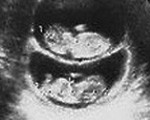
Regular oral medications prescribed during pregnancy causes a 6% chance of multiple births. However, if additional medications are given to increase ovulation, the percentage increases to 20-25% of multiple births. However, doctors usually recommend aiming for twins instead of 3 or more.
Possible Complications
1) Ovarian Hyperstimulation Syndrome (OHSS)
2) Multiple births